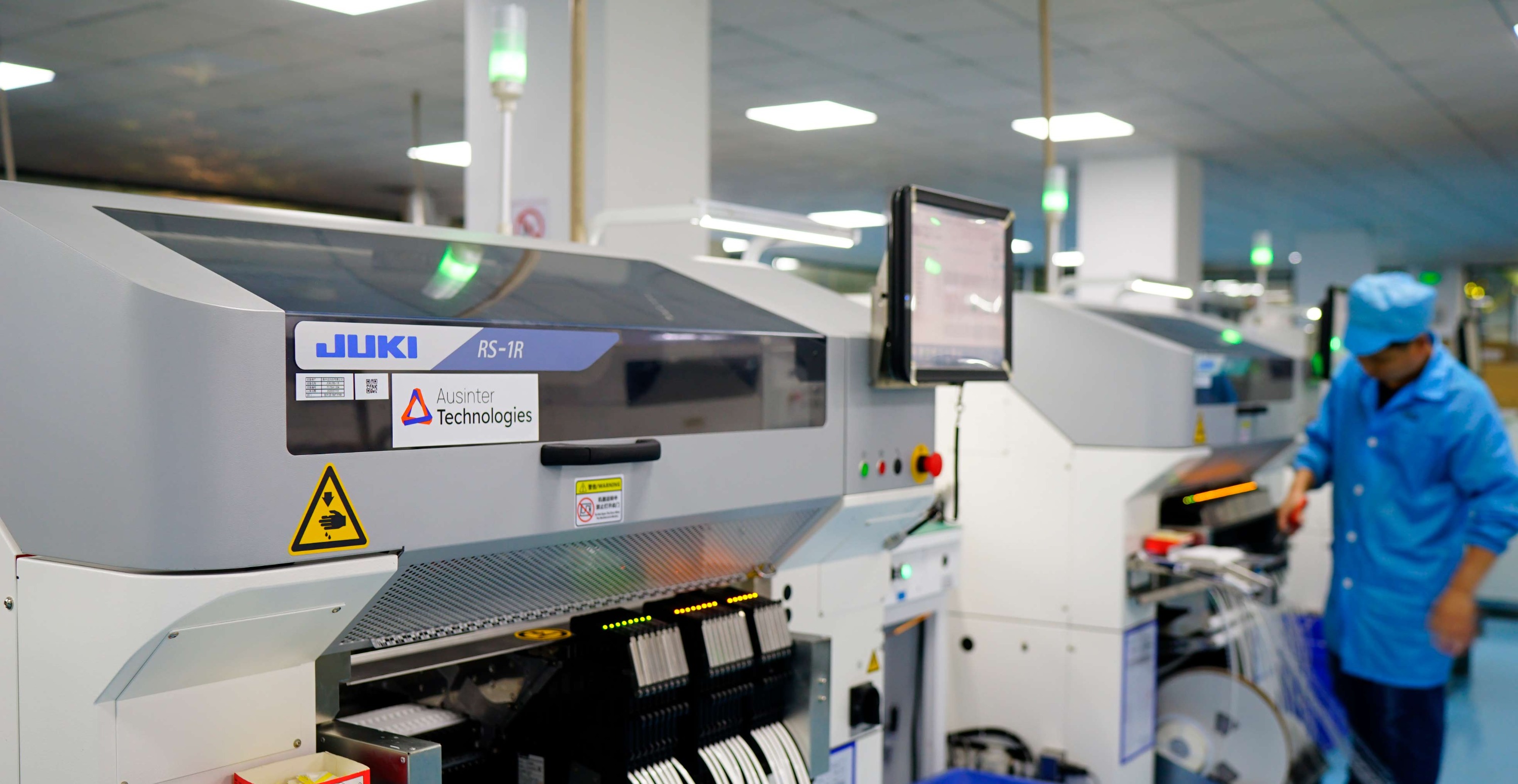
White-label projects in mass production.
Add your style or adapt to your needs. A long-term project life cycle with regular updates and modifications brings stable product quality and functionality. From schematic to shipped units, without a handoff between design house and factory.
Why ODM with a manufacturer
Most product companies buy design from one firm and manufacturing from another. The gap between them is where schedules slip — a design that can't be assembled economically, a component that was never checked against the factory's feeders, a revision that reaches the line two weeks late.
Our engineering team sits in the same building as our SMT lines. Design for manufacture isn't a review stage we schedule; it's a conversation that happens while the board is still being routed. The result is fewer prototype spins, faster transfer to volume, and one company accountable for the product working.
Product platforms
Three hardware families and a custom design service. Each platform is a starting point rather than a finished catalogue item — you choose the housing, the communications module, the firmware behaviour and the branding, and we adapt the platform to your market's standards.
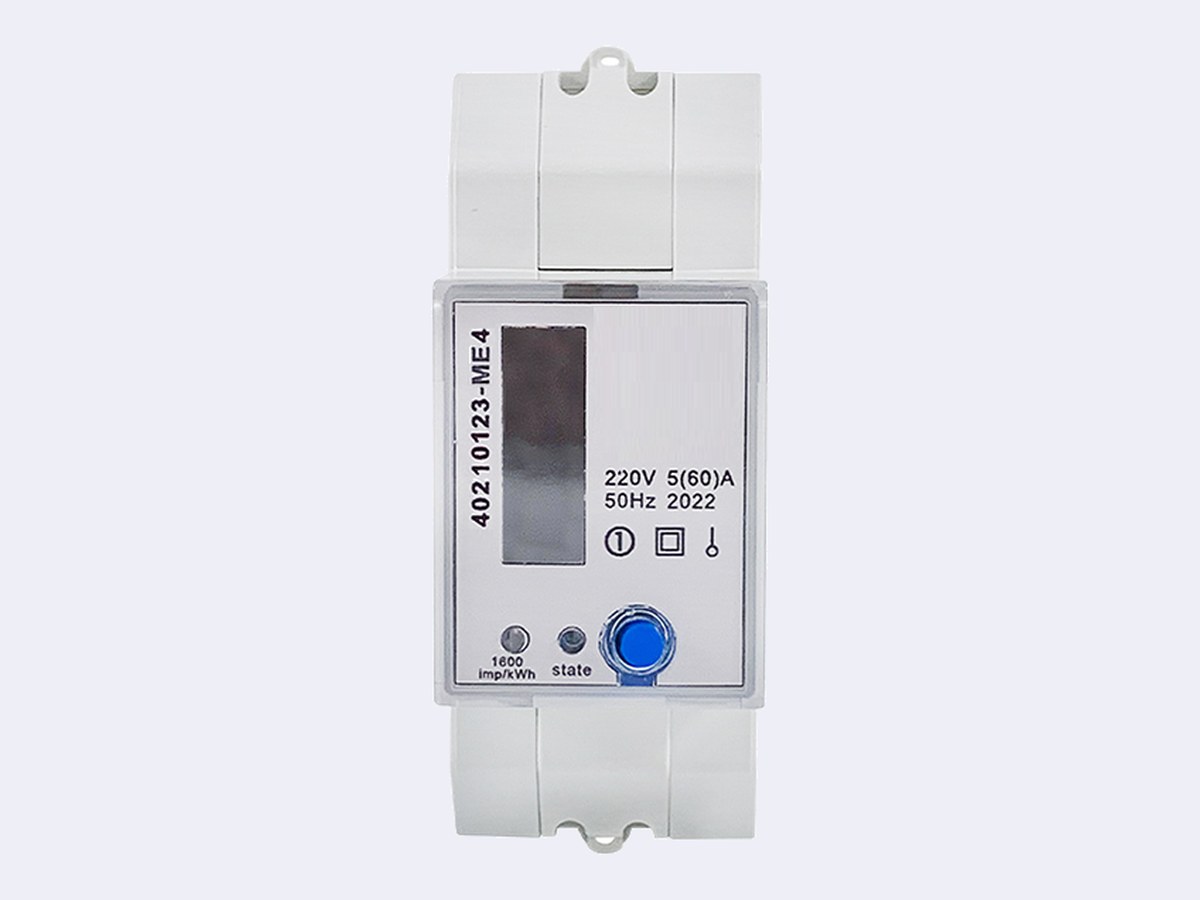
Energy metering
Single and three phase electricity, ultrasonic and mechanical water, diaphragm gas. Prepayment, remote valve and disconnect control, and swappable communications for utility AMI rollouts.
See metering platforms →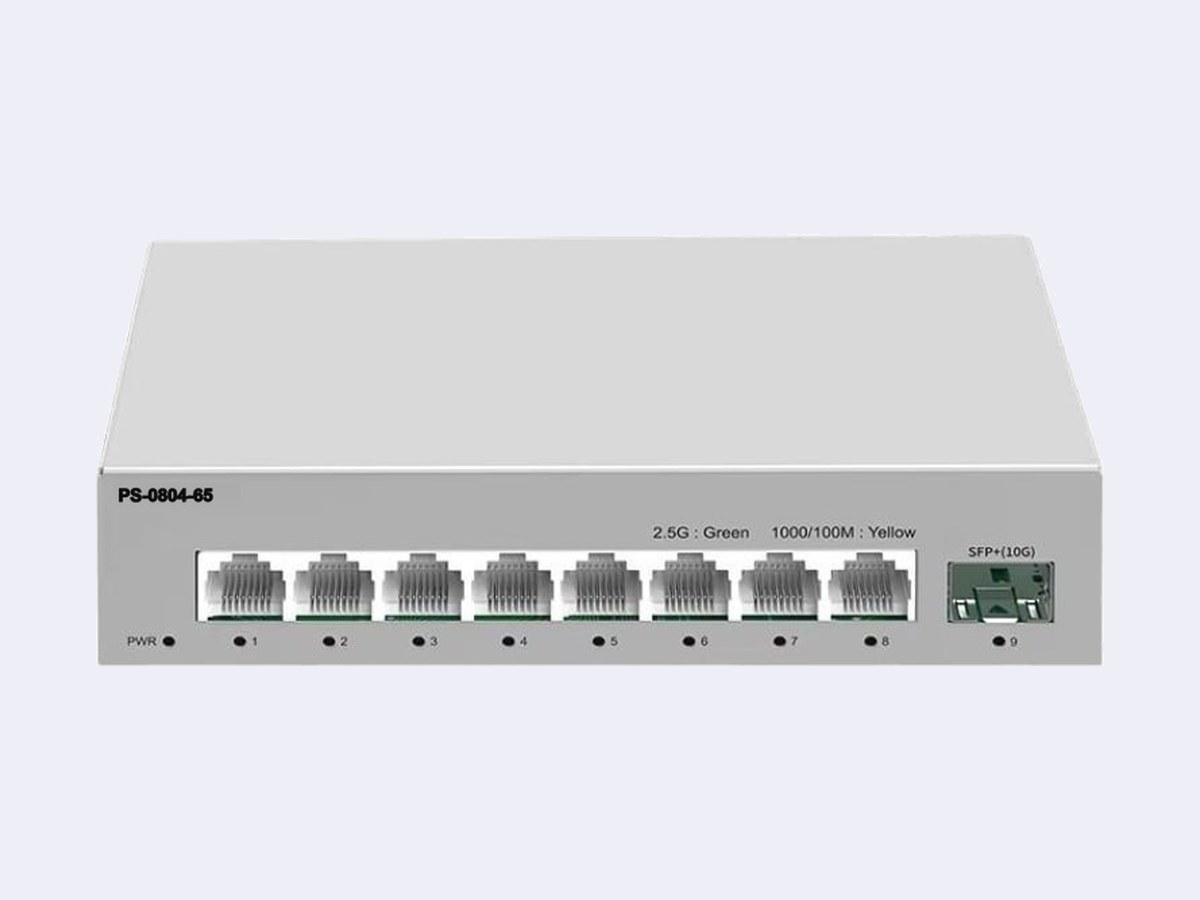
Telecom
PoE switches, Wi-Fi 6 routers and USB Wi-Fi adapters under your brand. Reference platforms already in mass production — housing, silkscreen, firmware branding and packaging to your name, with the shortest route to a first shipment.
See networking platforms →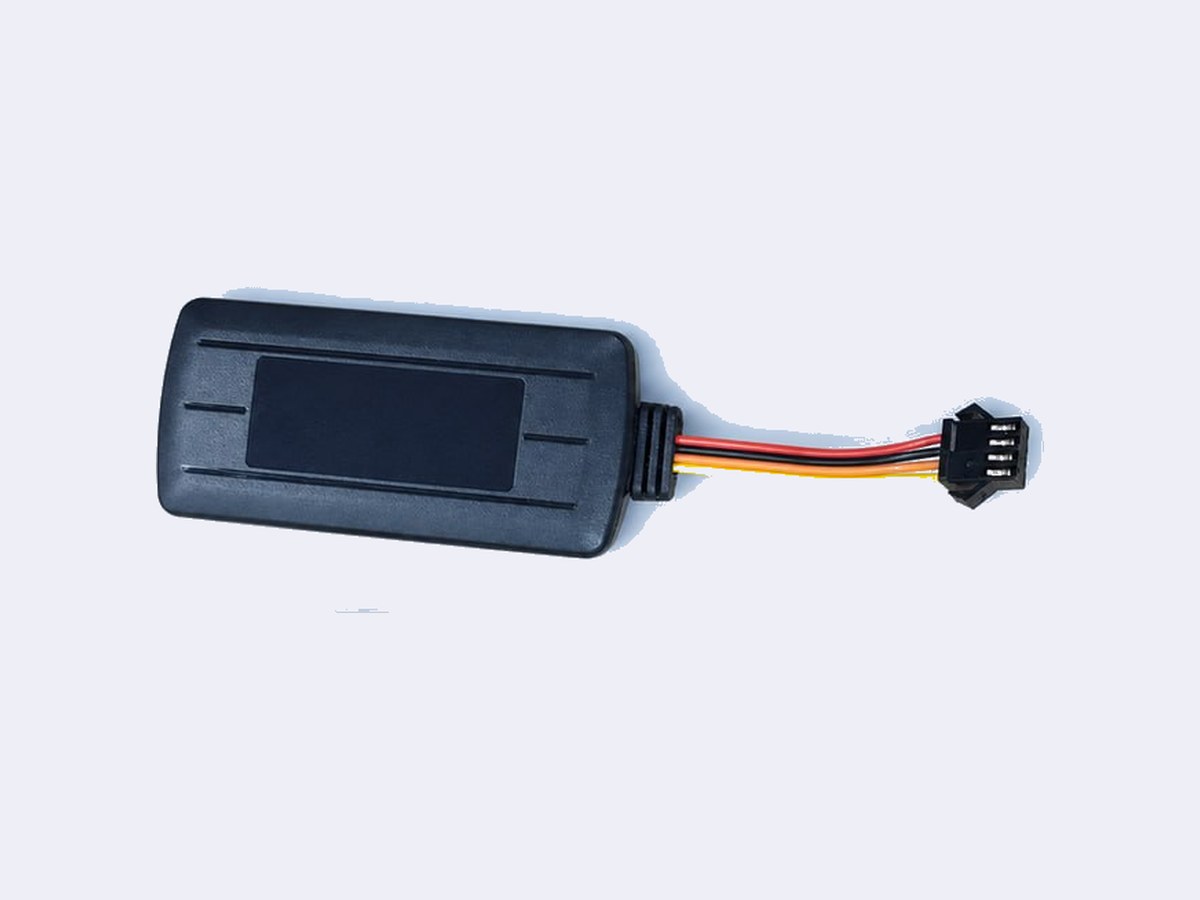
IoT tracking
Vehicle, cargo and asset trackers for fleet operators, logistics providers and rental businesses. GNSS positioning with cellular backhaul, configurable sensor inputs.
See trackers →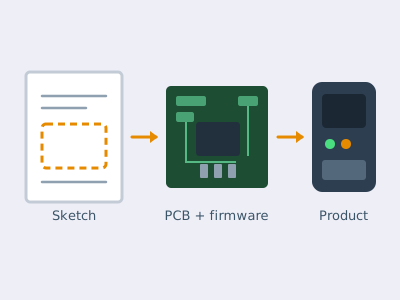
Custom design
Bring a requirement document, a hand sketch, or a competitor's unit you want improved on. Our engineers handle architecture, schematic, layout, firmware, enclosure and compliance.
Start a project →How an ODM project runs
Every project is different, but the shape is consistent. Timings below are typical for a device of moderate complexity — we commit to a specific schedule after the feasibility review.
| # | Stage | What happens | Typical |
|---|---|---|---|
| 01 | Requirements and feasibility | We turn your brief into a written specification: functions, standards, target cost, volumes. You get a fixed quotation and schedule. | 1–2 weeks |
| 02 | Design | Architecture, component selection, schematic capture, PCB layout, firmware, enclosure. DFM review runs in parallel, not after. | 4–8 weeks |
| 03 | Prototype and EVT | First articles built on our own lines. Functional test, bring-up, design corrections. | 3–4 weeks |
| 04 | Validation and DVT | Environmental, EMC pre-scan, accuracy and life testing. Design frozen at the end of this stage. | 4–6 weeks |
| 05 | Certification | Test lab submission and approval management for your target market. We prepare the documentation and handle the lab. | 6–12 weeks |
| 06 | Pilot and production | PVT build, test jig and fixture development, then volume production with ongoing engineering support. | Ongoing |
Capability
Commercial terms
Intellectual property
For custom designs, you own the design outputs — schematics, layout files, firmware source and mechanical files — under the terms agreed in the development contract. Where a project builds on one of our existing platforms, we set out clearly in advance which parts remain ours and which become yours.
NRE and tooling
Development is quoted as a fixed non-recurring engineering fee, staged against milestones. Injection mould tooling, if needed, is quoted separately.
Confidentiality
We sign an NDA before any technical discussion. Project teams are separated, and customer files are not shared across projects.
Tell us what you need built.
Send a specification, a sketch, or a description of the problem. Our engineering team reviews every enquiry and replies in a timely manner — with a technical question, not a sales call.